22/10/2017
You Can Never Have Enough Information
ČSH
Over the past five years, autumn has become a time when hemophilia patients of all age groups share moments together at the traditional intergenerational meeting. This year was no exception. The second October weekend brought all participants together in the largest conference space at the Top Hotel in Prague. For young and old alike, it was an adventure navigating the local labyrinth of corridors. No one got lost, however, and nearly one hundred and fifty participants could enjoy shared moments with friends and renowned experts.
After the Friday arrival and overnight stay, the day began packed with plenty of news. The information concerned not only hemophilia treatment but also practical demonstrations of self-administration, physiotherapy, and portable ultrasound. The morning lecture block was opened by the then outgoing association chairman PhDr. Vladimir Dolejs. The packed hall heard the presentation of results from the second part of a survey on the lives of Czech hemophilia patients. It should be noted that in some respects the data correspond with the 2011 results. Nevertheless, there are plenty of data showing clear progress in hemophilia treatment. In this context, many respondents are also satisfied with the overall care they receive. The survey results will soon be presented on our website. We therefore recommend paying due attention to these interesting data. In the second lecture, prim. MUDr. Jan Blatny Ph.D. took the floor, opening with a comparison of current care with what was available in our country before 1990. He touched on topics such as: treatment with cryoprecipitates; long journeys of hemophilia patients to receive treatment; HCV; permanent damage to the joint system; extensive bleeding (into the gastrointestinal tract, CNS); prevention and an appeal to both the current and older generation to adhere to treatment. The conclusion was devoted to current data from the CNHP registry.
The third part of the morning program was dedicated to workshops and individual consultations. There were many topics, so everyone could find something of interest. During consultations, individual questions about total joint replacement, pharmacokinetics, and the necessity of prophylaxis were addressed. Mgr. Milan Pilat focused this year on the upbringing of hemophilia patients, and Mgr. Petra Buckova opened up new topics concerning hemophilia carriers. Proper physiotherapy exercise techniques were addressed individually by Mgr. Marie Katzerova and Mgr. Karolina Ptakova. The traditional workshops were complemented this year by Ostrava orthopedist MUDr. Richard Kasparek, who monitored the joints of attending hemophilia patients with his portable ultrasound. The ultrasound proved very useful on site, as during one routine examination it detected an acute bleed into the hip joint. Among this year's novelties, we would also like to mention two workshops. The first was led by nurse Katka Krupova, assisted by a silicone model of a human hand. On this model, interested participants could practice the proper procedure for intravenous administration. The simulation of needle insertion is completely identical to inserting a needle into a real hand.
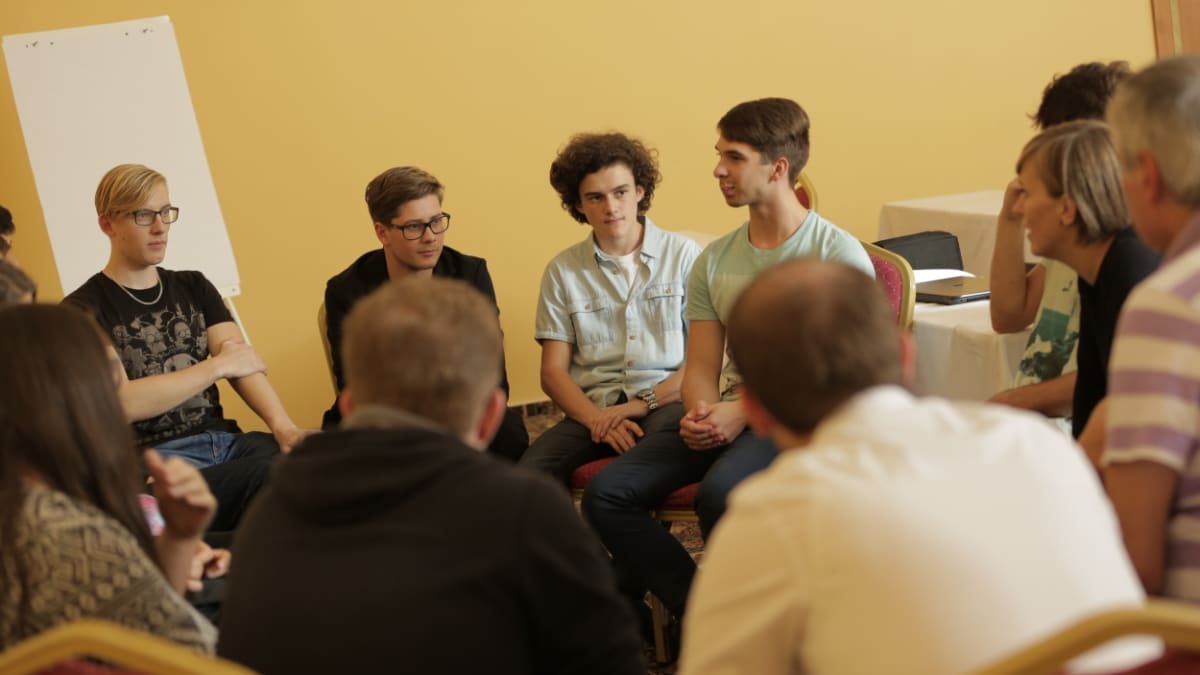
In the second case, it was a workshop for older children and adolescents, prepared by Jana Kalabova. In a friendly circle, the current and older generation talked for the first time about their struggles with hemophilia. Young hemophilia patients and their friends experienced firsthand the significant differences between current treatment and the approach to hemophilia before 1990. Children could learn from the older generation what hardships they had to endure when home treatment did not exist in our country. The discussion revealed two very different worlds. On one hand, a life of great limitations and pain; on the other, a life full of activities, sports, and visions for the future. This clearly demonstrates how important a role home treatment and prophylaxis have played and continue to play for hemophilia patients. The generational meeting was followed by a short film dedicated to the 75% of all people with bleeding disorders who do not receive treatment even today. Wishes, messages, and drawings that the children subsequently created will be forwarded by the Czech Hemophilia Society through the World Federation of Hemophilia to hemophilia patients in developing countries.
[widgetkit id=104]
We sincerely thank all experts for their attendance and the time they dedicated to this meeting. The event was financially supported by Shire.
The intergenerational meeting concluded with a conference and the election of a new board of the Czech Hemophilia Society, about which we inform you in the previous post.
The complete photo collection can be found on the hemophilia Rajce gallery.


