18/07/2018
A congress connecting science, medicine and a strong community of people with inherited bleeding disorders
ČSH

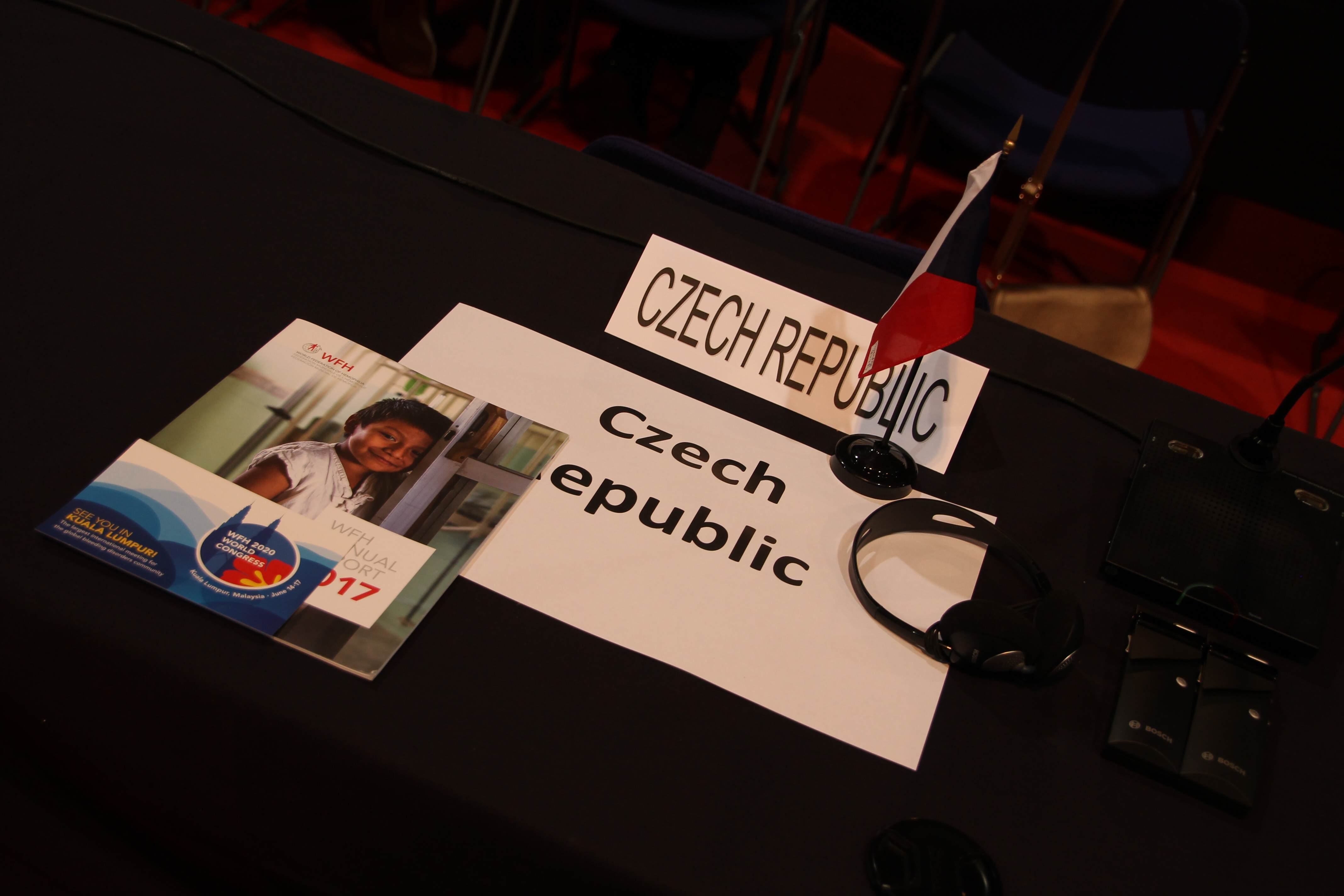
New possibilities in haemophilia treatment offer hope for the future. Whether it is extended half-life products, non-factor replacement therapies, or gene therapy. These and many other topics were intensively discussed by the plenary of the World Federation of Hemophilia (WFH) at its traditional world congress, held at the end of May in Glasgow, Scotland. The five-day congress offered more than 5,000 participants a wide range of events, including several scientific sessions addressing topics that are currently shaping the "haemophilia" world.
As with all changes and innovations, a number of unanswered questions arise, and discussions about new therapies are undoubtedly crucial. Everything will require, above all, communication and education of all stakeholders -- the people with haemophilia themselves, physicians, politicians, pharmaceutical companies, and healthcare professionals of many other disciplines. The current level of care has brought increased access and optimisation of tailored treatment. In past decades, clinical practice used uniform dosing based on the patient's body weight. According to the latest findings, it is clear that a much more effective approach is to take into account individual differences in pharmacokinetics and tailor treatment to each specific patient. This is an effective tool for optimising treatment and making efficient use of treatment costs.
Prophylaxis is currently the gold standard -- the earlier it begins, the better. Standard prophylactic treatment, where the dose is determined based on body weight, may not suit everyone, as the biological half-life of the administered drug (especially in haemophilia A) can differ among recipients. The goal is to maintain clotting factor levels above 2%, ideally 3%. If levels are maintained above 12%, the person with haemophilia will experience virtually no bleeding. Pharmacokinetics and the subsequent use of the data obtained can help tailor treatment to each individual. In our conditions, this is done more often in the paediatric population than among adults.
All currently available products are administered intravenously, which is why regular factor infusions can be very challenging for some people. Especially for infants and young children. Many require central venous access, which is associated with complications such as the risk of thrombosis, infection, or mechanical failure. The disadvantages of intravenous administration influence the development of future products, particularly the method of their delivery. Subcutaneous administration of factor would provide more convenient conditions and avoid complications associated with the need for venous access. It would facilitate prophylaxis particularly for children, for whom intravenous administration is very difficult. At present, people with haemophilia who have inhibitors are closest to this option (see article: European Commission approves product for treatment of haemophilia A with inhibitor), but in the future it could represent an alternative to factor VIII concentrate treatment for people with haemophilia without inhibitors as well.
Extended half-life (EHL) preparations for coagulation factor VIII generally extend the half-life by approximately 1.5 times compared to standard plasma-derived or recombinant products (SHL). This allows a reduction in application frequency from three times to twice per week and a reduction in the number of units by up to 20%. With the same number of applications, higher trough levels can be expected.
In many respects, the Glasgow congress was historic. Particularly in the comparison of haemophilia A and B, greater focus on women with bleeding disorders, as well as carriers. And last but not least, the emphasis on the individual needs of each person with haemophilia, at least in our part of the world. However, an important aspect remains self-care -- taking care of one's body through healthy nutrition, regular exercise, preventive check-ups, and physiotherapy. Physical activity works wonders for people with inherited bleeding disorders -- whether they are 5, 15, or 55 years old.
Pain studies in people with haemophilia across 22 European haemophilia centres showed that 35% of patients experience pain in five or more areas of the body. These can include areas that may not be related to the target joint. Pain can also be caused by the perception of damaged tissues and muscles. The physical consequences of muscle and joint pain, not only during movement, can lead to reduced quality of life and subsequently to feelings of frustration and helplessness. Acute pain is associated with bleeding, while chronic pain accompanies arthropathy. However, studies have shown difficulty in distinguishing between acute and chronic pain. It is incorrect to associate pain only with these two aspects. A person with haemophilia may experience pain even when there is no joint damage or bleeding. Furthermore, most published studies highlight the importance of assessing the psychosocial dimensions that contribute to pain. There remains a lack of studies demonstrating the effect of stress or negative emotions on pain. Studies on pain assessment across different types of haemophilia are also lacking.
Over the past three decades, gene therapy has made great progress and has significant potential for haemophilia. It is very encouraging that in people with severe haemophilia A and B, sustained increases in coagulation factor VIII and IX levels are being achieved. However, it is far from clear whether the chosen approach is also suitable for children and people with inhibitors. Questions that need to be overcome to maximise the benefit of gene therapy primarily concern safety aspects, durability of response, risk of inhibitor development, and above all the process of proper gene function.
While the Western world is discussing new products and individualised treatment, the World Congress in Glasgow also revealed the other side of the coin. The vast majority of the haemophilia population still does not have access to adequate care. Clotting factor concentrates are accessible to only 20%, and more than 50 countries have no access to treatment at all. Of the estimated 490,000 people with haemophilia worldwide, 57,000 receive treatment, and many die at an early age. Alain Weill, President of the World Federation of Hemophilia, expressed dissatisfaction with this situation in his opening address, comparing it to a catastrophe. The President's words also addressed a number of other issues but focused on two significant challenges. The first confirmed the urgent need for a reliable, easy-to-use, and affordable diagnostic tool. The second focused on the commitment to increase concentrate production, ensure access to gene therapy, and ensure treatment affordability.
It is therefore appropriate to appreciate the conditions under which people with haemophilia can live in the Czech Republic. This includes treatment availability, care at haemophilia treatment centres, educational meetings, rehabilitation stays, camps, educational materials, and much more. Let us not remain indifferent; let us be attentive and active in helping ourselves and others. Let us take an interest in our treatment and how we can contribute to it. The opportunities are countless. Health is the responsibility of each of us.
At the close of the congress, the supreme body of the WFH called on all member organisations to act together in the spirit of cooperation of the entire community of people with inherited bleeding disorders. In addition to the existing 129 countries, the WFH accepted 11 new member organisations, namely Ghana, Mauritius, Saudi Arabia, Tanzania, Uganda, the Bahamas, Barbados, Benin, Guyana, Mozambique, and Tajikistan. The WFH Board also underwent a number of changes, particularly in the positions of Vice President of the Medical and Financial Committees and several members of the Health and Executive Committees. The next congress will take place in two years in Kuala Lumpur, Malaysia.
Martin Bohůn