
19/12/2018
What Is Being Discussed?
ČSH
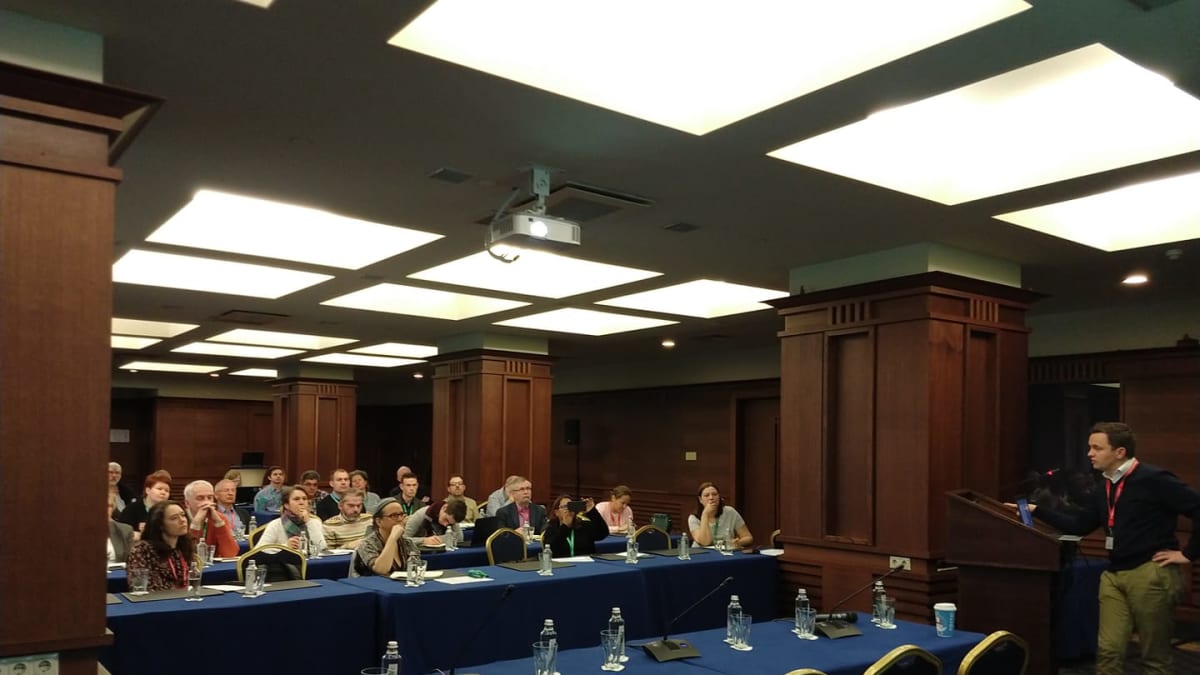
The European Haemophilia Consortium organised a workshop in Sofia on the topic of modern technologies and new therapies. The number of participants was limited, and the organisers placed great emphasis on questions from the audience, which consisted mainly of physicians and patient organisation representatives. The opening covered an overview of all ongoing clinical studies. Currently, several approaches to the treatment of hemophilia A and B exist.
The most well-known is the administration of the missing factor, whether plasma-derived or recombinant. Products with extended half-life have existed for some time now -- this is FVIII or FIX with an added molecule. The newest approach is the binding of von Willebrand factor before intravenous infusion, which results in a prolonged effect. Another, entirely different approach is non-replacement therapy, examples of which include NovoSeven, Hemlibra, and Fitusiran. Hemlibra attempts to mimic FVIII (it binds together factor IX and factor X -- thus it can only be used for hemophilia A), while Fitusiran increases thrombin levels in the blood. Gene therapy should also be mentioned, which aims to independently produce the missing factor in the liver. So far, the oldest successful gene therapy was carried out eight years ago, and the patient still has an elevated level of approximately 6 IU/dL. That may seem like a negligible value, but it represents the difference between severe and moderate hemophilia.
Currently, the company BioMarin has a product in the third phase of clinical study and intends to enrol 100 patients. In phase 2, they achieved stabilised levels in the range of 30-120 IU/dL. Each of the mentioned methods has its advantages and disadvantages. I assume that the advantages of gene therapy compared to other approaches need not be mentioned. Non-replacement therapy has the greatest advantage in its applicability for people with hemophilia who have inhibitors, longer administration intervals (once a week, every 14 days, or even once a month), and subcutaneous injection as the method of administration. For products with extended duration of action, the advantage is already clear from the name -- either a lower frequency of administration is sufficient, or at the same frequency, a higher average factor level is maintained in the blood.
Before I get to listing the disadvantages, it is necessary to point out that I am drawing on information obtained at the workshop and that these are partly the personal concerns of the presenting physicians, although most are based on clinical studies. If you are considering switching to a new type of preparation, rely primarily on your physician.
A major question mark over all new therapies is long-term safety. With PEGylated preparations, the greatest concern is the accumulation of auxiliary carrier molecules in organs. These doubts are supported by measurements showing that the injected PEG molecules are not excreted from the body. This does not happen with preparations made using Fc fusion, since these molecules are biologically degraded and the organism can reuse them. Through Fc fusion, factor VIII or factor IX bound to another protein can be produced using genetic engineering methods. Some of these drugs are produced by human cell cultures, so they are very similar to human body proteins. For the first time in people with hemophilia, physicians are even concerned about microthrombosis with the use of Hemlibra. So far, there is also no clear solution for serious injuries in inhibitor patients using this preparation.
Gene therapy brings many risks, but the already-mentioned best results offset them. Concerns are raised primarily by the risk of liver damage, inhibitor development, and the possibility of cancer. Furthermore, it is unclear how long gene therapy remains effective. In all likelihood, gene therapy can only be undergone once in a lifetime.
In conclusion, I want to express joy over the new possibilities, but at the same time I urge caution before reckless participation in clinical studies.
Jan Půček