15/10/2018
All Generations of Haemophilia Patients Gathered in Jihlava
ČSH
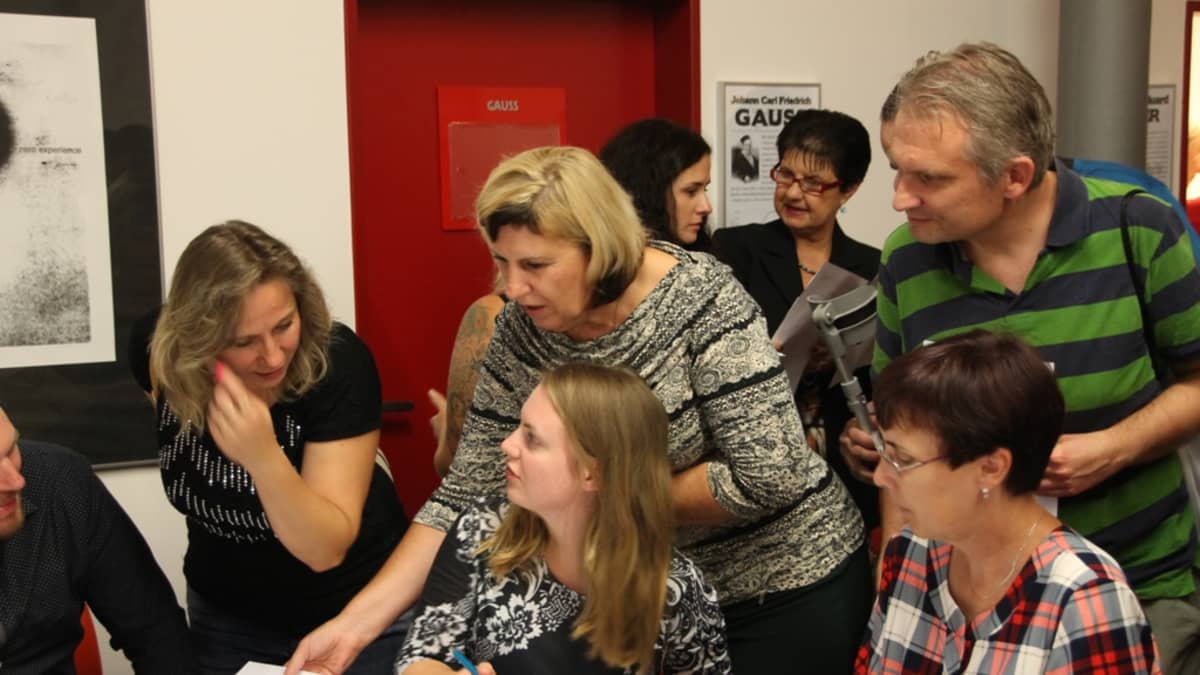
The intergenerational meeting of haemophilia patients and their closest ones holds a special place in our calendar. Nobody doubted that interest would be great again this year. The topics clearly invited it. Nearly one hundred and fifty participants filled the pleasant premises of the EA Business Hotel in Jihlava to learn about the latest developments in not only the haemophilia world. This time, the Society also made room for people with von Willebrand disease. Unfortunately, interest from members with this condition was almost nil. And so the entire programme focused on haemophilia-related topics.
To better plan the meeting programme, we asked participants what currently interests them and which topics they would like to focus on. We received an overwhelming number of responses. The main block of lectures began on Friday evening with news in haemophilia treatment. Saturday morning was dedicated to three current topics: paramedics and emergency medicine; psychosomatics; and carriership in blood clotting disorders. The afternoon workshops then addressed a wide range of specific questions and situations. For example, managing physical pain, developments in treatment, extended half-life concentrates, joint replacements, heredity of haemophilia, pregnancy in carriers, gene therapy, portable ultrasound, the development and treatment of haemophilic arthropathy, and more. There was also something for the men's group of (not only) haemophilia patients, and a programme was prepared for children from the youngest to adolescents, covering all age groups.

Thanks go to all who participated in the programme and its preparations. Also to all the experts who came and introduced us to an overwhelming amount of interesting information and news. And how do our listeners -- participants -- rate this intergenerational meeting? We received a letter from Sternberk and Kuncicky u Basky:
With the arrival of autumn, another intergenerational meeting "Together About Haemophilia" took place, once again through the cooperation of the Czech Hemophilia Society and Hemojunior with the support of Shire. This time we met in mid-September in Jihlava at the EA Business Hotel, which provided pleasant premises for lectures, workshops, childcare, and accommodation (not to mention the excellent food :-)).
On Friday evening, we had the opportunity to participate in an informal discussion with Peter Salaj from the Institute of Haematology and Blood Transfusion in Prague, learning interesting information and news about haemophilia treatment. In his distinctive way, he answered all our questions.
Those who were not too tired in the evening sat down to a glass of good wine and could chat with friends they had not seen for a long time, well into the late hours.
The Saturday whirlwind of lectures was opened by Martin Bohun with an introductory word, after which Michael Beren presented current information about the production of identification bracelets and other aids being prepared by the Czech Hemophilia Society and Hemojunior in cooperation with the Emergency Medical Service. This was followed by a lecture from the witty Tomas Jezek, president of the Chamber of Paramedics of the Czech Emergency Medical Service. Although the topics were serious, Mr Jezek managed to lighten everything and present it with humour. Among other things, we learned more about how to behave in case of injury and how to use those identifiers. They can help a great deal and sometimes even save a life.
Next came a lecture by psychologist Veronika Dostalova from the Institute of Haematology and Blood Transfusion in Prague about psychosomatics and how the physical and psychological aspects influence each other and how to work with pain.
Then Veronika Tapalova from the Department of Gynaecology and Obstetrics at Brno University Hospital introduced us to current options for family planning and the course of pregnancy and childbirth for haemophilia carriers, which was of particular interest to younger couples.
Workshops in smaller groups followed, led by the aforementioned experts, opening the opportunity to discuss in a closer circle what had caught our attention in the previous lectures.
The workshop dedicated to news in the treatment of haemophilia and von Willebrand disease was led, as every year, by Jan Blatny from Brno University Hospital. With his human and simultaneously professional approach, he answered our questions about everything that was currently on our minds.
This time, orthopaedist Juraj Seko from Ostrava University Hospital sat at the portable ultrasound, assisted by local haemophilia centre physician Radka Hrdlickova. They examined the joints and muscles of haemophilia patients of all age groups to determine and visually describe to the individual what condition the joint was in, where the cause of pain might be, or to confirm or rule out acute bleeding. Interest was so great that the workshop continued until the late evening hours.
Marie Katzerova prepared a workshop focused on physiotherapy. The workshops mainly discussed the issue of haemophilic arthropathy in the ankles. How to prevent it, slow its progression, and alleviate its painful symptoms. Participants were interested in which sport is ideal for haemophilia patients. Which sport to start in childhood, or conversely, how to exercise after joint replacements, when new movement possibilities open up for haemophilia patients.
For us mothers, the "most powerful" workshop was the one with psychologists Milan Pilat and Veronika Dostalova on the topic of Psychological Aspects of Mothers of Haemophilia Patients. It provided us with space to share experiences, feelings, and parenting approaches in relation to our sons with haemophilia. Given that raising a haemophilia patient is quite impossible to convey to those with healthy children, it is wonderful to be able to talk with mothers of small or already grown sons about similar experiences, feelings, worries, and joys. These were beautiful moments of mutual understanding.
The children were well taken care of too. Not only were they looked after by professionals whom even an anxious haemophilia mother would not hesitate to entrust her child to, but Martin Bohun, Jana Kalabova, and Karolina Janderova also prepared useful workshops for them. They created groups for children aged 6 to 10 and for teenagers.
A men's group of haemophilia patients also met, led by Lukas Koblasa. In the circle, everyone could share their experience with haemophilia. According to my husband's words, it turned out to be much more personal and intimate than he had expected at the beginning.
In the evening, Katerina Altmanova also presented carriers with the results of a previous questionnaire survey about the lives of carriers.
All speakers remained available throughout the day for individual consultations. It is a pity that it went by so quickly. All that remains is to look forward to the next meeting.
We thank everyone, especially the members of the CSH Council, who prepared the meeting.
Dasa Cajankova and Vitezslava Novakova with families.
**


