06/06/2019
Women and bleeding disorders
ČSH
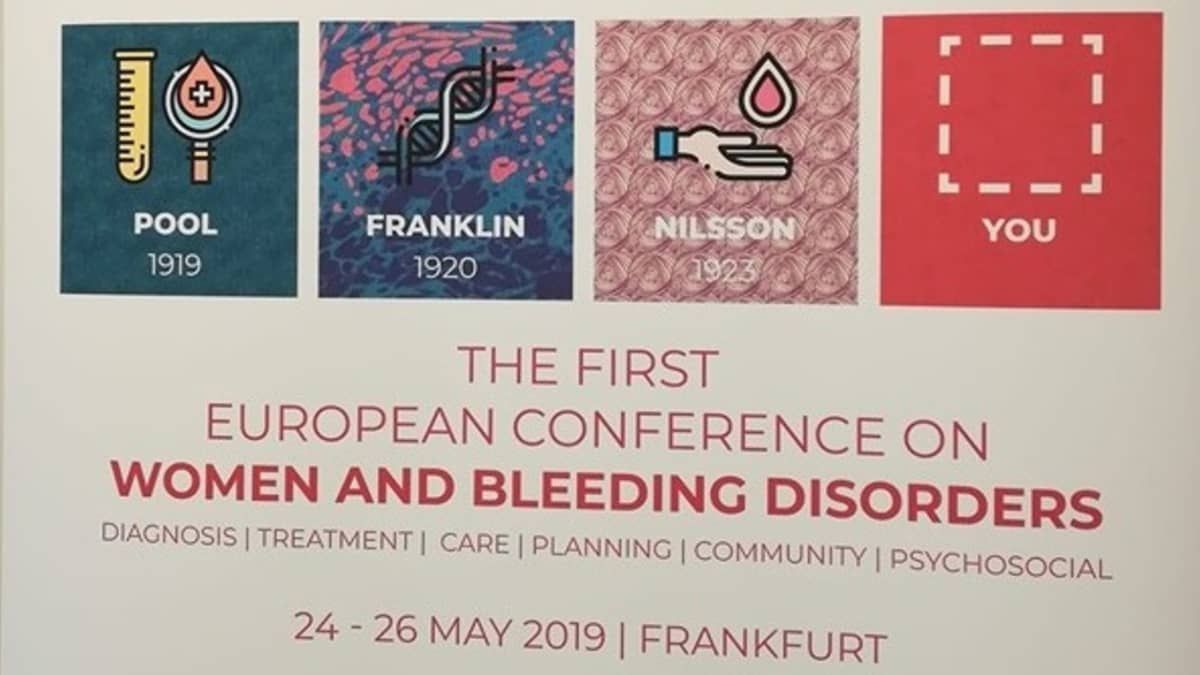
Women bleed too, and not just during menstruation. For women with a bleeding disorder, menstruation can turn into a nightmare, with heavy bleeding lasting more than seven days. And since their mothers, grandmothers, and sisters may have similar problems, they consider it "normal". Menstruation lasting longer than 7 days, or requiring sanitary products to be changed every two hours, may be a symptom of a bleeding disorder. In such a case, the woman should be examined at one of the haemophilia treatment centres. The historically first meeting of women with blood clotting disorders in Europe took place in recent days in Frankfurt am Main. The conference was organised by the European Haemophilia Consortium (EHC), and the Czech Hemophilia Society was represented by our long-standing active member Tereza Říhová.
The packed three-day programme covered everything that needs to be taken into account. Attendance was truly impressive. Around 150 people from various parts of Europe, but also Canada and America -- primarily members of patient organisations, physicians, patients themselves, and representatives of pharmaceutical companies.
Bleeding disorders in women can be caused by low factor VII and VIII (haemophilia), von Willebrand disease, platelet disorders, and other unknown causes.
1. How can such a woman be identified?
a) Unusually long or heavy menstruation, b) Nosebleeds, c) Frequent bruising, d) Bleeding during procedures, during or after childbirth, e) Bleeding from the gums, ...
2. What should such women do?
a) Get diagnosed at one of the haemophilia treatment centres
3. How to prepare for important life situations
a) Menstruation b) Surgical procedures c) Family planning (fertility, pregnancy, childbirth, postnatal care) d) Psychosocial impact of the disease e) Quality of life for women with bleeding disorders
Some of the women had repeatedly encountered the claim that women do not suffer from bleeding disorders; however, this is a myth that must be overcome in the minds of both patients and physicians. Therefore, the association haemophilia patient = man does not always correlate with the truth; women (carriers) can also have low clotting factor levels. Vice versa, men (haemophilia patients) are also carriers of this disease. This established terminology can be misleading.
The aim of the EHC leadership, especially the "women committee", will be in the coming years primarily to raise awareness and support women with bleeding disorders, not only across Europe.
Bleeding disorders include primarily haemophilia, von Willebrand disease, platelet disorders (e.g. Glanzmann thrombasthenia), and other unknown disorders.
In the world, and also in the Czech Republic, there are many women with bleeding disorders who are not diagnosed and treated according to their needs. During the conference, I heard many very personal stories from women who, despite numerous pleas to various doctors, were not diagnosed in time. In most cases, this only happened after they had been through a rather arduous journey. Postpartum haemorrhage, intra-abdominal bleeding, numerous complicated surgeries with unexplained bleeding, ... Such patients belong in the hands of haematologists.
Tereza Říhová
Attendance at the conference was supported by CSL Behring.
**


