
06/12/2025
News in Hemophilia and von Willebrand Disease Treatment 2025
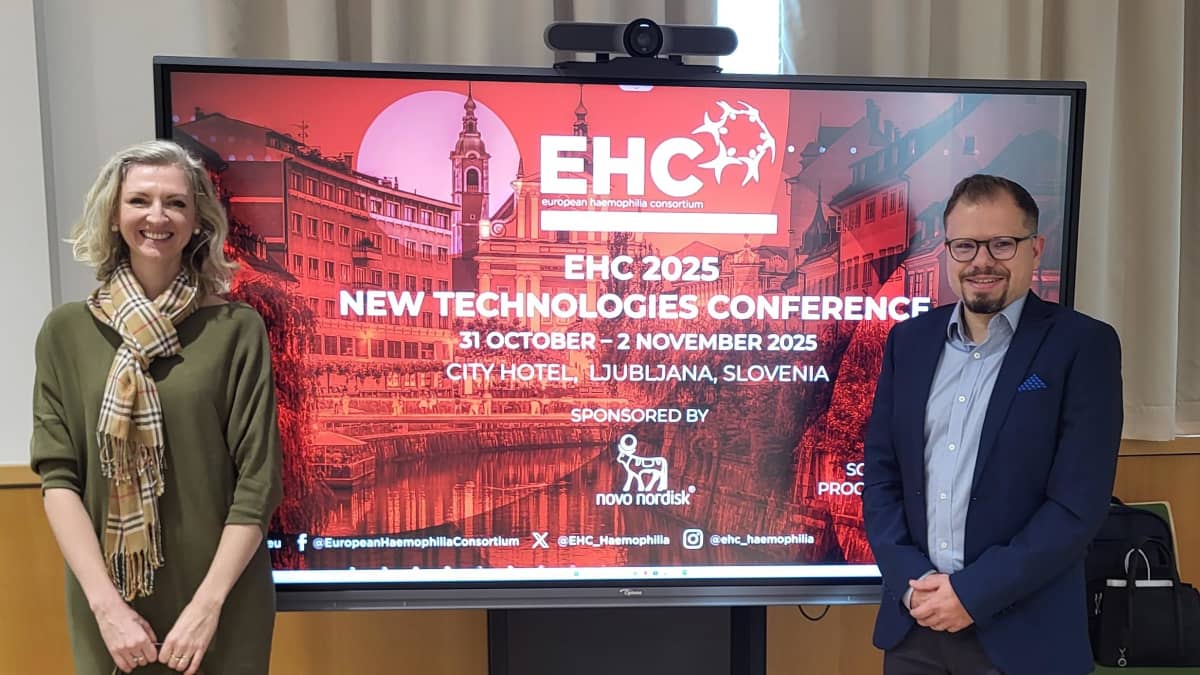
This year, the traditional workshop on new technologies in hemophilia and von Willebrand disease treatment was held under the auspices of EHC in Ljubljana, Slovenia. We bring an overview of news from rebalancing therapies through gene therapy to expanding prophylaxis options for VWD.
This year, the traditional workshop on new technologies in hemophilia and von Willebrand disease treatment was held under the auspices of EHC in Ljubljana, Slovenia. The association was represented by Vice President Martin Žídek, and this year we offered the physician's place to MUDr. Irena Čápová, MBA, from the hematology center at Nymburk Hospital. The meeting continued the long-standing EHC tradition and provided an overview of news from rebalancing therapies through gene therapy to expanding prophylaxis options for VWD.
Hemophilia A - New Treatment Options
Regarding hemophilia A treatment, developments over the past year have further strengthened the position of the drug with the active substance efanesoctocog alfa (marketed in our country under the trade name ALTUVIIIO). This is a FVIII concentrate with an ultra-extended half-life that allows once-weekly administration in a prophylactic regimen. Pharmacokinetic data from the XTEND program show that FVIII activity remains in the normal to near-normal range (> 40%) for most of the week, while bleeding rates remain very low (in the pivotal clinical trial, the annualized bleeding rate was 0). In clinical practice, this means fewer disruptions to daily life and for many patients, periods without treated bleeds.
In addition to emicizumab, which continues to enable subcutaneous prophylaxis without the need for venous access in patients with and without inhibitors, another FVIII mimetic is approaching clinical practice. Mim8 (denecimig) has positive Phase 3 results and a Biologics License Application (BLA) was submitted to the FDA on September 29, 2025. The drug is not yet approved; approval will be decided by both American and European regulators based on the complete data package. Compared to emicizumab, this drug could achieve even higher efficacy.
Rebalancing Therapies
The category of so-called rebalancing therapies has moved closest to everyday practice:
Marstacimab (HYMPAVZI) received US approval in October 2024 for adolescents and adults with hemophilia A or B without inhibitors with weekly subcutaneous administration (in pen form). In the UK NICE system, it is recommended for hemophilia B, while for hemophilia A it did not issue a recommendation due to an unfavorable cost-effectiveness ratio compared to FVIII/emicizumab.
Concizumab (ALHEMO) was first approved in the US in December 2024 for patients with inhibitors, and on July 31, 2025, the FDA expanded the indication to include hemophilia A/B without inhibitors (daily subcutaneous dosing).
Fitusiran (Qfitlia), an siRNA that reduces antithrombin, was approved in March 2025 for hemophilia A/B with and without inhibitors with dosing once monthly to once every 2 months depending on the regimen.
Shared Decision Making
A significant topic this year was shared decision making (SDM) between patient and physician. At a time when the spectrum of options has expanded to include subcutaneous treatments with varying dosing frequencies, modern concentrates with longer half-lives, rebalancing approaches, and for selected patients gene therapy, it is crucial to openly discuss treatment goals, lifestyle, preferences, and concerns. The SDM model places on the physician the obligation to clearly present alternatives and on the patient to actively ask questions and share priorities, so that the chosen prophylaxis best "fits" the specific life situation.
Gene Therapy - Long-term Data
Fresh long-term data from the field of gene therapy were also presented:
Hemophilia A: The five-year analysis of the GENEr8-1 study confirmed that 81.3% of treated patients remain in the fifth year without returning to routine prophylaxis; at the same time, the rate of treated bleeds is very low and there are no new safety signals.
Hemophilia B: The four-year follow-up of the HOPE-B study shows stable FIX levels and in most patients a sustained departure from regular prophylaxis.
Across Europe, the number of patients who have undergone gene therapy is growing. For example, in Italy it has already been administered to 18 patients with hemophilia A.
Von Willebrand Disease - Breakthrough in Prophylaxis
In the US, there have been breakthrough expansions of approved options for prophylactic treatment of von Willebrand disease:
Wilate® (plasma-derived VWF/FVIII 1:1) has had an indication for routine prophylaxis in all types of VWD (≥ 6 years) since 12/2023; the pivotal WIL-31 study demonstrated an ~84% reduction in mean total ABR compared to "on-demand" regimen and a significant decrease in spontaneous and joint bleeds.
VONVENDI®/vonicog alfa (recombinant VWF) was expanded in the US on September 5, 2025 to include routine prophylaxis in adults across VWD types and simultaneously on-demand/perioperative use in pediatric patients. In the EU, the CHMP adopted a positive opinion on November 13, 2025 for the amendment of the Veyvondi registration, which is heading toward harmonization of the indication text in Europe as well.